Viceroy
Perhaps the most commonly confused species with the monarch is the viceroy. They look nearly identical, save for one black line on the viceroy's postmedian hindwing, which you can see circled here.
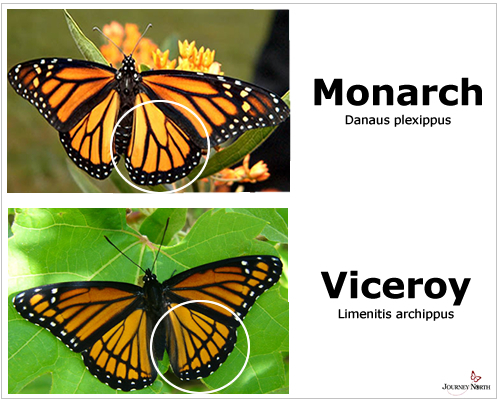
Viceroys are also smaller than monarchs, though it may be difficult to tell the difference as a butterfly flies past you. Viceroys measure between 2.5 and 3.375 inches (6.3-8.6 cm), while monarchs typically measure between 3.375 and 4.875 inches (8.6-12.4 cm).
Flight, migration, and timing
The viceroy's flight is erratic compared to the monarchs' float-like, "flap, flap, glide" pattern. Viceroys do not migrate, but rather overwinter as larvae rolled up in a leaf of their host plants, willow or poplar.
In the spring, the larvae need about 15 days to complete the life cycle and become a butterfly. They must develop through the remaining instars (approximately 5 days) and the chrysalis stage (at least 10 days). You will not see an adult viceroy where you live until about 15 days after willow or poplar leaves have emerged.
The rate of viceroy development will depend on spring temperatures. Temperatures control how early leaf-out occurs, how quickly the leaves grow, how quickly the caterpillars grow, the chysalis develops, and the adult butterfly emerges. Development proceeds more slowly in cooler temperatures and more quickly in warmer temperatures.
Location
Whether viceroy adults have time to develop before monarchs reach you depends on your distance from Mexico. For example, in Minnesota, the first monarchs typically arrive by late May but adult viceroys don't usually complete development until June. Whereas in the northeastern United States, monarchs don't usually arrive until mid to late June, but adult viceroys typically emerge by late May.
Queen
In the southern U.S., you may see queens and monarchs together at the same time. In addition to visiting nectar plants together, they both utilize milkweed as a host plant. In this photo submitted to Journey North by Susan in Canyon Lake, Texas, one of these butterflies is not like the others. Can you tell which butterfly is a queen, not a monarch?

It's the butterfly right in the center of the photo that's a slightly darker shade of orange. With open wings, it's easier to tell the two species apart, as the queen lacks the dark lines on the top of the wings that the monarch has.

Larval lookalikes
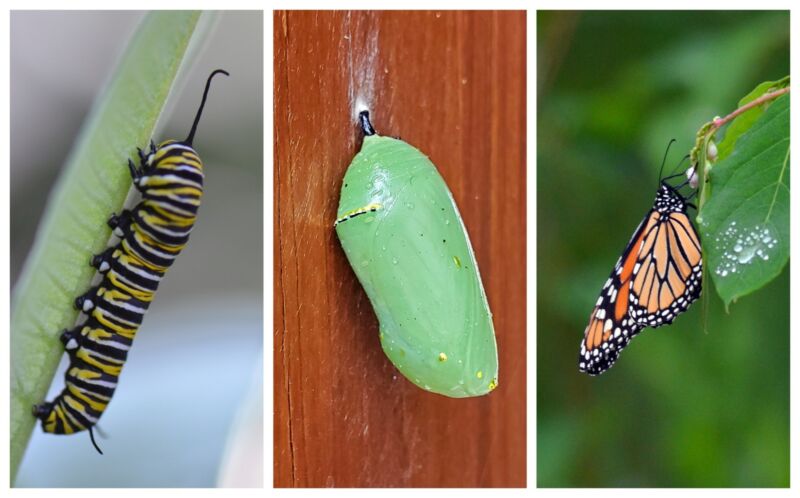
Monarchs and queens look alike at both the egg and larval stages as well. Take a look at the stages of development for queens. Do they look familiar?
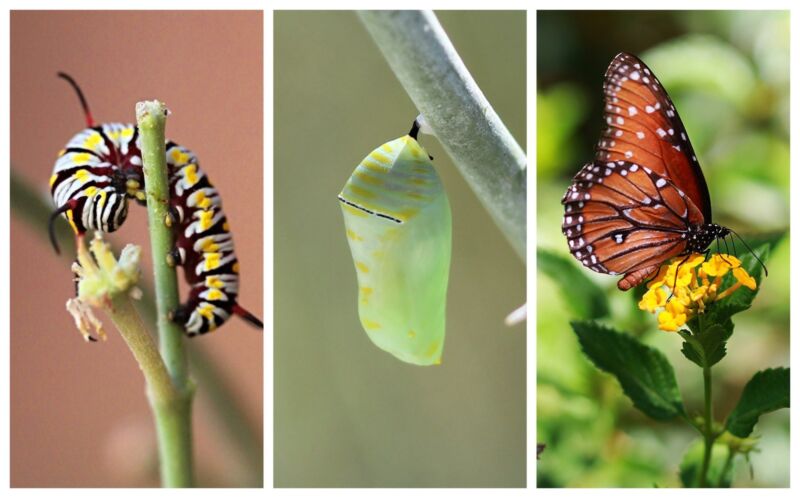
Take a look at monarchs in the same stages. Note the slight differences in the larval stage, where queens have one extra set of filaments that may have a slight red tint to them.
What about the others?
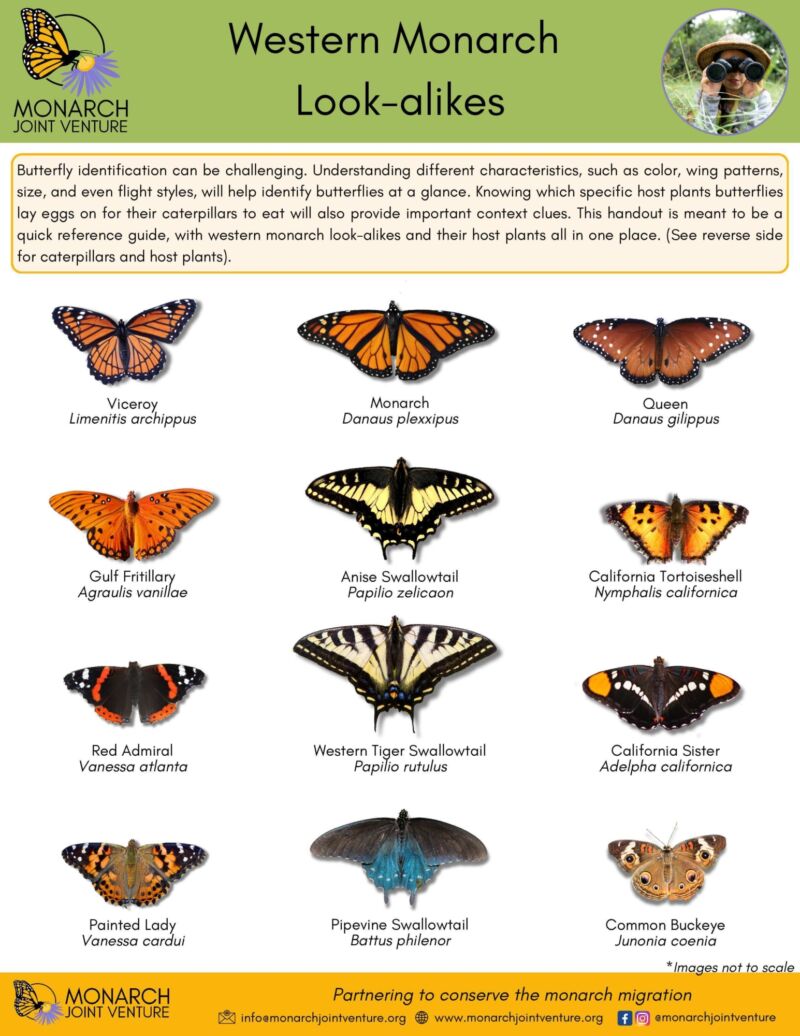
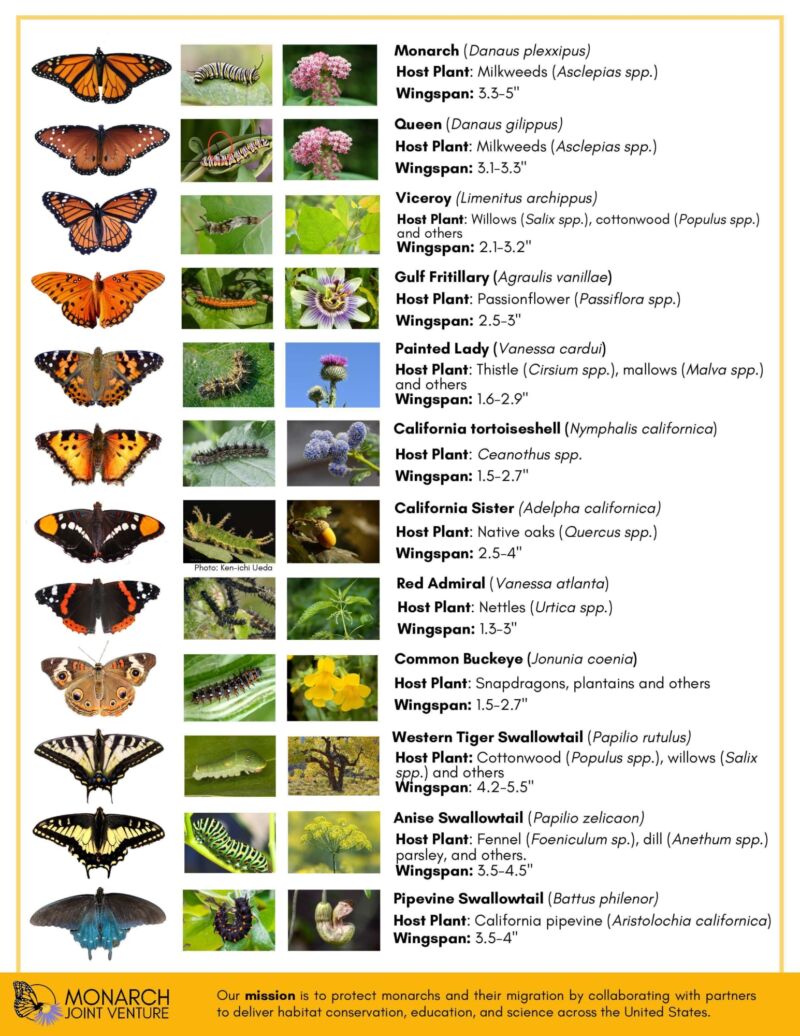
While these are the two species that are most commonly confused with monarchs, there are several others that can occasionally trick monarch observers, especially those just starting to take an interest in butterflies.
Among them are fritillaries, swallowtails, painted ladies, and red admirals. Take a look at some of the butterflies below that could possibly be confused with monarchs.