The oyamel fir forests of central Mexico provide the ideal microclimate for monarchs to survive the winter. Cool temperatures are necessary for monarchs to save their energy, as they typically survive the winter on stored resources acquired on their migration south.
There is a delicate balance between the perfectly cool temperatures and temperatures becoming too cold or too warm for monarchs.
How cold is too cold?
Monarchs save energy by living in a cool place, but there are dangers for monarchs in temperatures that are too cold. If temperatures get too cold, monarchs can freeze to death.
Freezing temperatures can kill monarchs, which are cold-blooded, but chilly temperatures above freezing also present issues. Monarchs can't fly unless they warm their muscles to 55°F. Below 41°F, they can't even crawl.
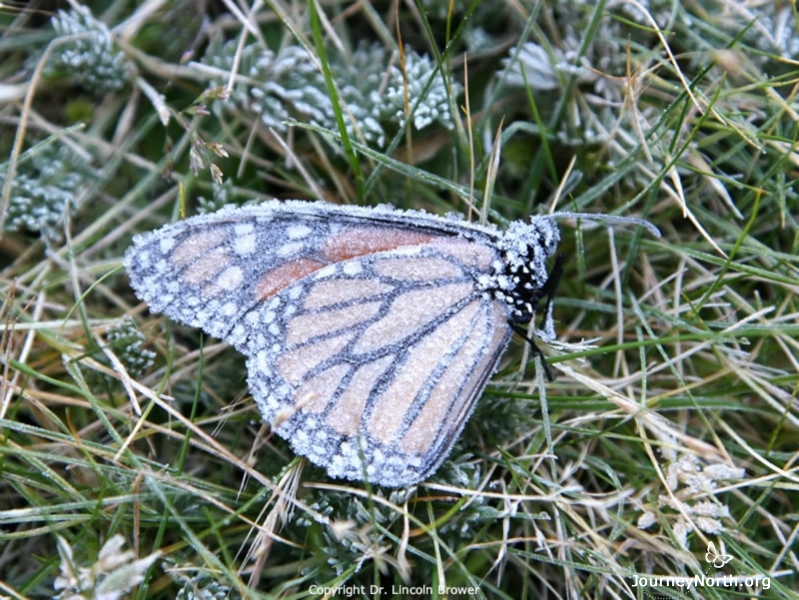
On the other hand, temperatures that are too high can lead to problems as well. In the winter, high temperatures can cause butterflies to burn through their stored fat too quickly.
How do oyamel fir forests protect monarchs?
Outside of the oyamel fir forests where monarchs spend the winter, temperatures may rise and fall sharply during the day and night, but inside the forest, temperatures don't change as much. The forest acts like a blanket and umbrella that protects monarchs from both cold and moisture.
On cool days, you may see monarchs on the ground, as strong winds and heavy rain can blow them down from their clusters. If they're cold, it can take hours or even days for them to return to their clusters, as lower temperatures slow monarchs down.

It even snows occasionally inside the oyamel fir forest. If they're buried in the snow, monarchs can stay on the ground for more than a week, but many can still survive a snowstorm if they can stay dry.
How do monarchs warm up?
On chilly but sunny mornings in the fall, you may see monarchs on flowers, trees, or other vegetation with wings spread wide to the sun like solar panels, absorbing the sun's warmth. This is called basking, which helps warm up monarchs' wings to 55°F so they can fly.

On a cool day in the monarch colonies, you may see monarchs on the forest floor "shivering," moving their wings so quickly they're blurry to a camera's lens and you can hear the wings fluttering against nearby vegetation. Monarchs do this to warm their muscles. Then, they can crawl or fly off the forest floor when air temperatures are below their normal thresholds to do so.
Monarchs want to avoid the forest floor, where they're exposed to predators, dew, colder temperatures, and potentially even frost or snow.
Temperature and migration
Besides the issues that falling temperatures provide directly to monarchs, migrating monarchs also rely on the right temperatures, as cold temperatures and frost can kill flowers that provide nectar along their migration route.